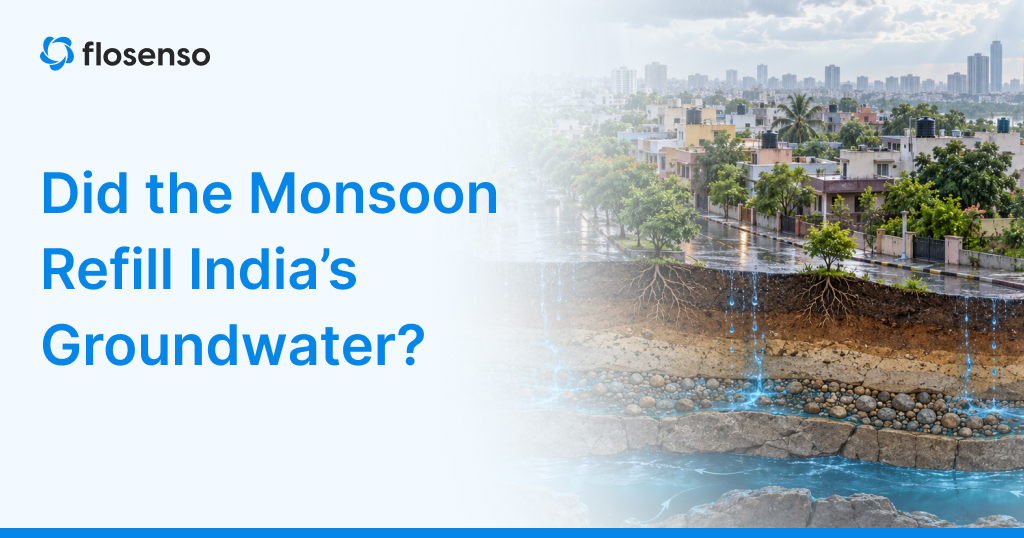
India’s monsoon is not just a yearly weather event. It is one of the biggest natural opportunities we have to refill our water reserves. And yet, rain does not automatically mean more groundwater. In fact, India’s 2026 monsoon ended with rainfall 12.6% below the long-term average, making it the driest monsoon in more than a decade. The country received around 759.5 mm of rainfall against the normal 868.6 mm between June and September.
So, did this monsoon recharge India’s groundwater? The short answer is… in some places, yes. But not as much as the rain clouds might have suggested.
Does rain increase groundwater level?
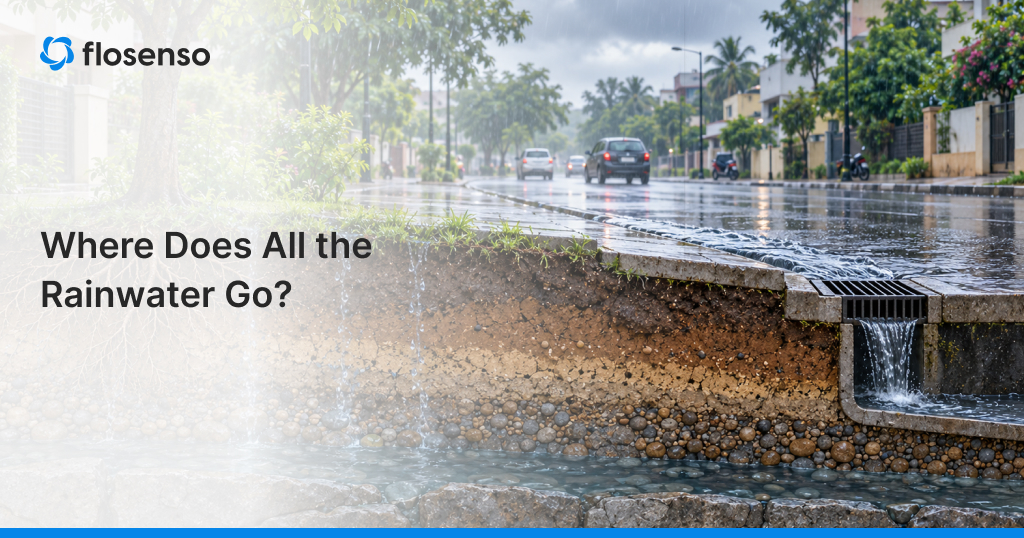
Yes. But there is a little more to it. When rain falls, some of it flows over roads, rooftops and open land. Some evaporates. Some is used by plants. And some slowly moves through the soil and rocks below the ground. That last part is where groundwater recharge happens.
The ground acts as a giant natural sponge. A good, steady rain gives the sponge time to absorb water. Heavy rain over a short period, however, can behave very differently. If the ground cannot absorb water quickly enough, the water simply runs off. So, a rainy day does not necessarily mean a happy water table.
The monsoon may disappear from the weather forecast, but groundwater does not suddenly disappear with it. Water that enters the ground can move slowly through soil and rock and replenish underground aquifers. This process is known as aquifer recharge. These aquifers are underground layers that store water. Some recharge happens naturally through rainfall. Some can be encouraged through ponds, recharge pits, check dams and other structures.
But then comes the other side of the equation. We take water out for drinking, farming, industries, homes, and, sometimes, because someone forgot to switch off the pump. That last one sounds small. Across millions of homes, it is not.
How is India’s groundwater doing?
There is actually some good news. According to the Government of India’s 2025 Dynamic Ground Water Resources Assessment, India had an estimated 448.52 billion cubic metres (BCM) of annual groundwater recharge. The country’s annual extractable groundwater resource was estimated at 407.75 BCM, while annual groundwater extraction stood at 247.22 BCM. That puts India’s overall stage of groundwater extraction at 60.63%. There has also been improvement over the longer term.
Between 2017 and 2025, India’s estimated annual groundwater recharge increased from 432 BCM to 448.52 BCM. During the same period, the share of assessment units classified as safe increased from 62.6% to 73.14%, while over-exploited units declined from 17.2% to 10.8%.
That is encouraging. But it does not mean the groundwater problem is solved. India is a big country. Groundwater conditions can look very different from one district to another. And this year’s weaker monsoon is a reminder that we cannot build water security around rainfall alone.
Why is groundwater depletion still a problem?
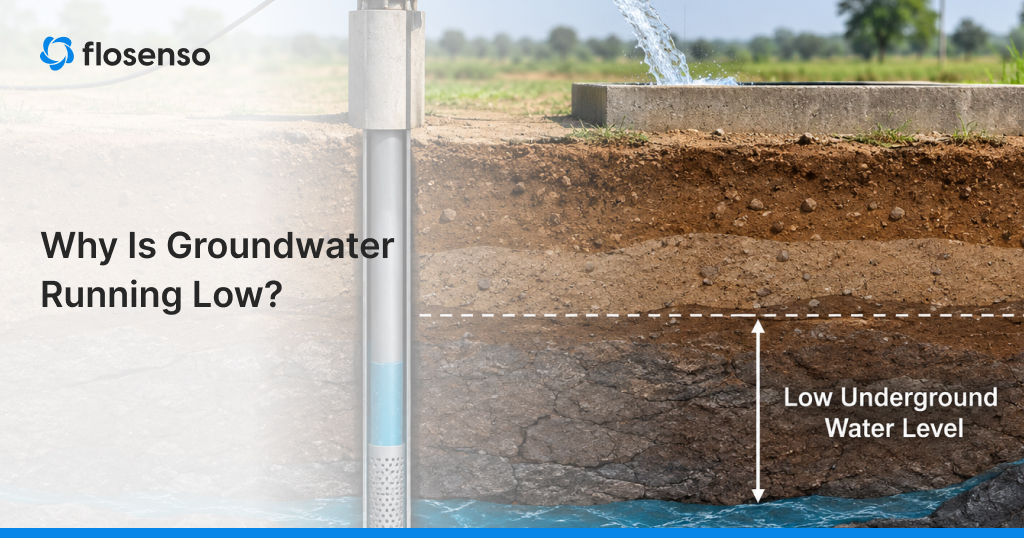
Because groundwater has a very simple problem. We can take it out much faster than nature can put it back in. That is one of the biggest causes of groundwater depletion. If extraction keeps exceeding recharge, the water table gradually falls.
And once the water table drops, getting the same amount of water can require deeper borewells, more pumping and more energy. In other words, groundwater depletion can become both a water problem and a money problem.
What about groundwater pollution?
There is another problem we often forget. More groundwater is not always better if the water is contaminated. The Government of India’s Annual Ground Water Quality Report 2025 notes that groundwater quality is increasingly affected by natural processes as well as human activity, including industrial activity and unsustainable agricultural practices. Shallow aquifers are particularly vulnerable because they interact more closely with surface-level sources of contamination.
And this is not just a theoretical concern. A 2026 government response noted that groundwater samples across parts of Uttar Pradesh showed localised instances of contaminants including arsenic, fluoride, iron, salinity, uranium, manganese, lead and nitrate above drinking-water limits.
Can rainwater harvesting help?
A rainwater harvesting system in India can help capture rainwater before it becomes runoff and direct it towards storage or recharge. Rooftops are a good example. Instead of letting rainwater flow down a drain, a properly designed system can collect it and direct it towards a storage tank or recharge structure.
At a larger scale, ponds, recharge wells, percolation tanks and check dams can also help. The Government of India’s Master Plan for Artificial Recharge to Groundwater proposes around 1.42 crore recharge structures across the country, with the potential to harness approximately 185 BCM of rainwater.
That is a lot of water. But infrastructure is only one part of the answer. We also need to become better at using the water we already have.
What is artificial groundwater recharge?
Artificial groundwater recharge means helping water move into underground aquifers through planned structures and methods. Instead of waiting for water to naturally find its way underground, recharge structures create pathways for it. Different places need different solutions because soil, rainfall, geology and groundwater conditions are not the same everywhere.
How to increase ground water level?
The answer is surprisingly simple, recharge more and waste less. Yes, there are large-scale solutions.
But small daily decisions matter too.
- Fix leaking taps.
- Reuse water where possible.
- Harvest rainwater.
- Protect local water bodies.
- Avoid unnecessary pumping.
- Use water-efficient irrigation.
And, importantly, make sure the water you have pumped is not wasted.
What does this have to do with water pumps?
A pump is useful because it moves water where you need it. But it does not know when you have enough water unless something tells it. This is where automation can make everyday water management smarter.
Instead of switching a pump on and then remembering to check it later, an automatic system can use water level information to control when the pump starts and stops. That can help prevent two very common problems-
Overflowing tanks and unnecessary pump running.
The benefit is not just convenience. If water is not overflowing, you are not losing water. If the pump is not running longer than necessary, you are not using electricity for no reason. And if the pump is protected from dry running, you may also avoid unnecessary equipment stress.
It is a small change at the household level. But multiply small changes across thousands of homes, apartments and buildings, and the impact starts looking much bigger.
Is smart water management the next step?
It needs to be. India’s water challenge is not simply about finding more water. It is also about managing the water we already have better. That is why water security and smart water management need to go together.
We already use technology to remind us about meetings, track deliveries and tell us when our food has arrived. Perhaps our water tanks deserve a little attention too. Because most of us still follow the same ancient system:
- Turn on pump.
- Go upstairs.
- Look at tank.
- Get distracted.
- Forget pump.
- Remember pump.
- Run upstairs.
- Turn it off.
- Repeat
- It works.
Until it does not.
Solutions such as rainwater harvesting and artificial groundwater recharge can help put more water back into the system. Smarter water management can help us waste less of what we already have. And even something as ordinary as an overhead tank can become part of that effort.
This is where solutions such as Flosenso comes into the picture.
Flosenso is an app-based automatic water level controller that uses a sensor to monitor tank levels and automatically control the water pump based on set levels or schedules. It can help prevent tank overflow, avoid unnecessary pump operation and provide real-time updates through the app.

Want to manage your water smarter? Visit the Flosenso website to explore the automatic water level controller and find the right solution for your home. Take a step towards saving water, reducing unnecessary pump usage and making everyday water management easier.
It does not recharge an aquifer. It does something much simpler. It helps make sure the water that has already made its way into your tank does not go to waste. Because saving water is not always about doing something dramatic. Sometimes, it is simply about knowing when to stop.
Frequently Asked Questions
How long does groundwater recharge take?
Groundwater recharge can take anywhere from a few days to several years. It depends on factors such as soil type, rainfall, rock structure and the depth of the aquifer. Water may seep quickly through sandy soil but take much longer to pass through clay or dense rock.
How can you check the groundwater level in your area?
You can check groundwater reports published by the Central Ground Water Board (CGWB) or contact your local groundwater department. These reports provide information about groundwater levels and changes across different regions. Local borewell owners may also notice changes in water availability, although this alone does not give a complete picture.
Does rainwater harvesting work in every location?
Rainwater harvesting can be useful in many places, but its effectiveness depends on local rainfall, soil type, geology and available space. Some locations are better suited for groundwater recharge, while others may benefit more from storing rainwater for later use. A suitable system should be chosen based on local conditions.
Can groundwater levels fall even after a good monsoon?
Yes. A good monsoon does not always mean groundwater levels will rise. If much of the rain runs off the surface or groundwater extraction remains high, recharge may not be enough to meet demand. This is why responsible water use is important even after a rainy season.
How does saving water at home help prevent groundwater depletion?
Many homes depend on groundwater supplied through borewells. Fixing leaks, avoiding unnecessary water use and preventing overhead tank overflow can reduce the amount of water that needs to be pumped. When practised across households and communities, these small steps can help reduce pressure on local groundwater resources.