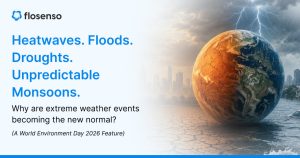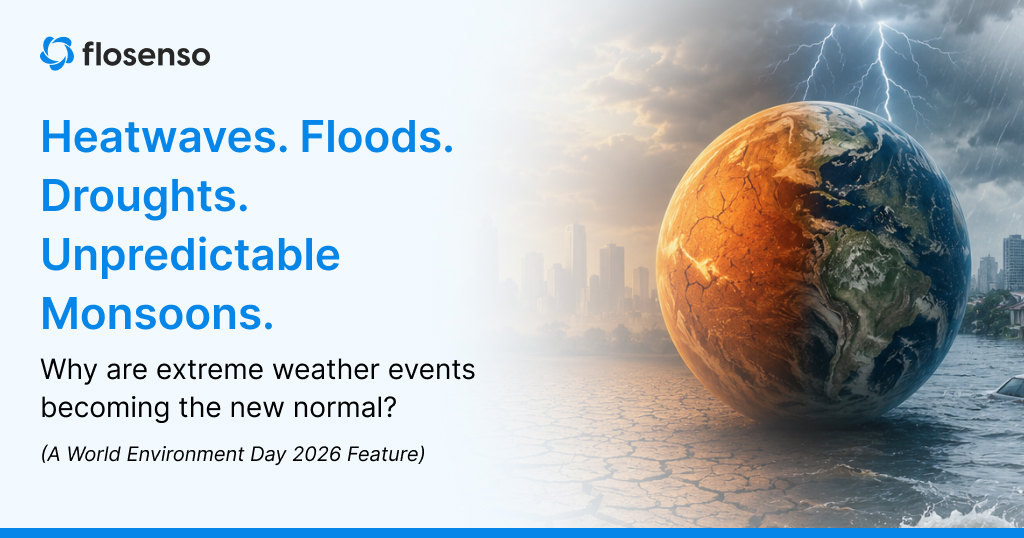
For decades, extreme weather felt like an occasional headline. A flood in another country. A drought in a distant region. A cyclone that appeared once in a generation.
Today, it feels different.
Record-breaking temperatures are becoming routine. Rainfall patterns are becoming harder to predict. Water shortages are appearing in regions that once had reliable supplies. Across continents, people are witnessing extreme weather conditions that seem more intense, more frequent, and more destructive than ever before.
The science confirms what people are already experiencing.
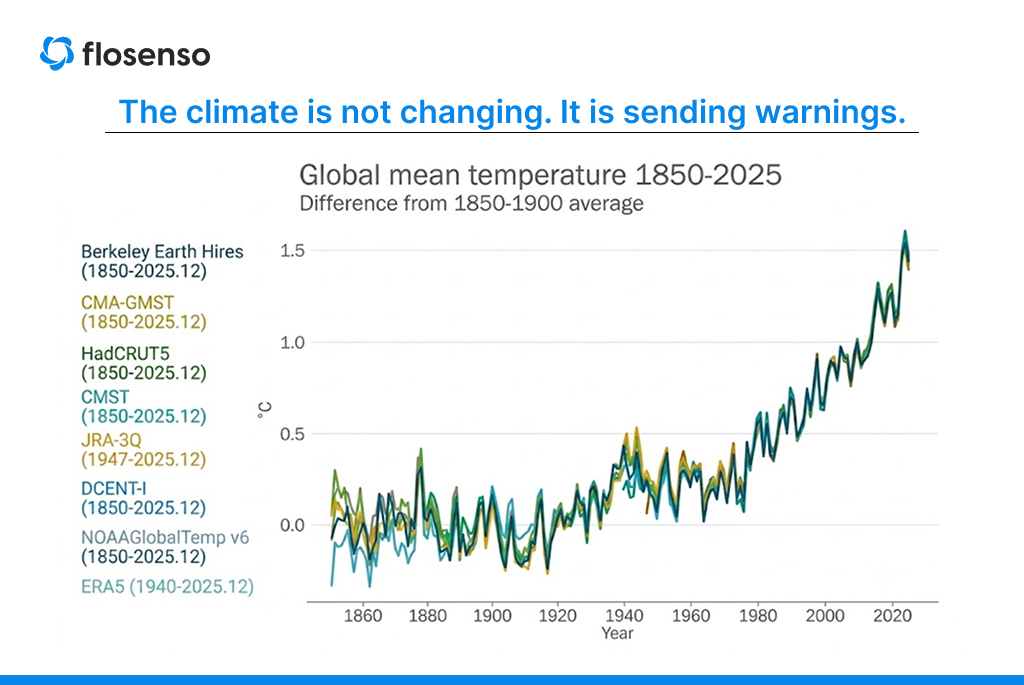
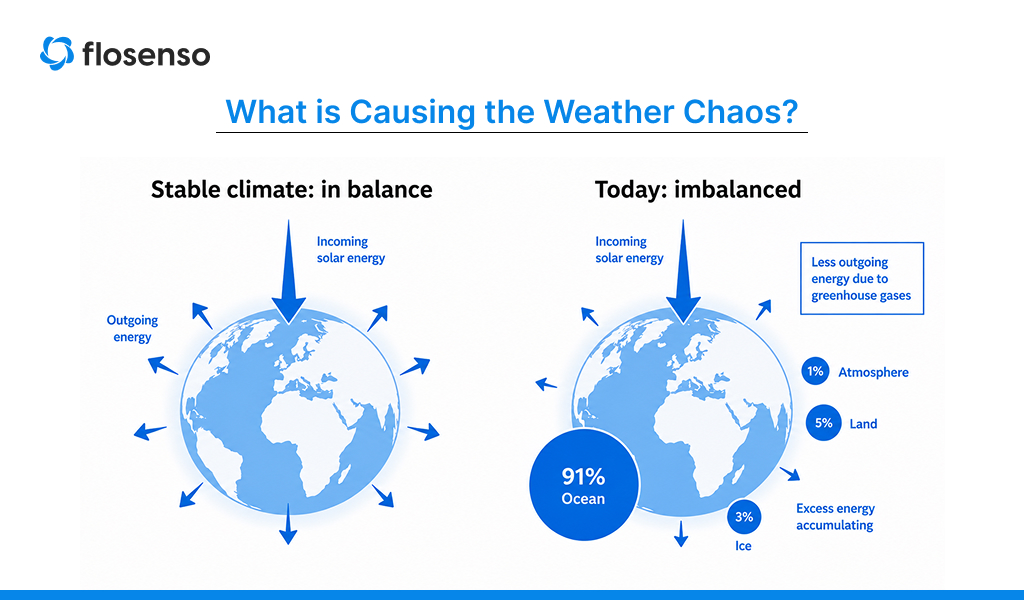
According to the World Meteorological Organization (WMO), the period from 2015 to 2025 was the hottest eleven-year stretch ever recorded. The Earth’s energy imbalance also reached its highest level in recorded history in 2025, signaling that our planet is absorbing more heat than it can release.
This World Environment Day, our focus is not on climate change alone. The real concern is the growing frequency and severity of extreme weather events around the world.
Why are extreme weather conditions increasing around the world?
Extreme weather is increasing because human activities have warmed the planet. Rising greenhouse gas emissions are trapping more heat in the atmosphere and oceans. This additional heat intensifies the water cycle, increases atmospheric moisture, alters rainfall patterns, and fuels stronger storms.
As a result, extreme weather events such as heatwaves, droughts and floods, cyclones, wildfires, and heavy rainfall are becoming more frequent and severe.
The United Nations estimates that climate-related disasters have increased fivefold over the past 50 years. Meanwhile, economic losses from these events now cost the global economy hundreds of billions of dollars annually.
Consider Earth’s climate to be a finely tuned air-conditioning system. For thousands of years, it maintained a relatively stable balance. Then humans started adding massive amounts of greenhouse gases into the atmosphere by burning coal, oil, and natural gas.
These gases act like an extra blanket wrapped around the planet.
Carbon dioxide levels today are nearly 50% higher than they were before the Industrial Revolution. Scientists estimate that human activities have already warmed the Earth by approximately 1.44°C compared to the late 1800s.
That number may sound small. However, for a planetary system, it is enormous. Every fraction of a degree increases the likelihood of extreme weather conditions. Heatwaves become hotter. Storms become stronger. Rainfall becomes heavier. Droughts last longer.
The climate system starts behaving in ways it never did before.
What are the factors driving global climate change?
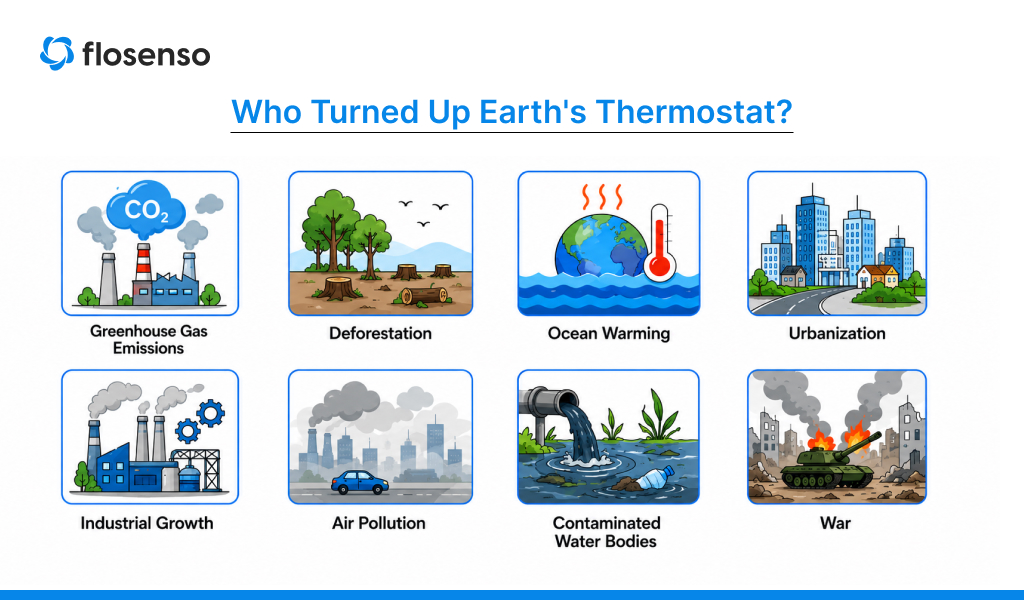
Climate change is often discussed as a single problem. In reality, it is the result of multiple human activities and environmental pressures working together. Earth’s climate is a giant balancing system. For thousands of years, natural processes maintained that balance. Today, several forces are pushing the system beyond its limits.
Greenhouse gas emissions
The largest driver of global climate change is the release of greenhouse gases into the atmosphere. When coal, oil, and natural gas are burned for electricity, transportation, manufacturing, and daily activities, they release carbon dioxide and methane. These gases trap heat that would otherwise escape into space, accelerating global warming.
Deforestation and loss of Natural Carbon sinks
Forests play a critical role in regulating climate. Trees absorb carbon dioxide and naturally cool the environment. However, large-scale deforestation for agriculture, urban expansion, and infrastructure development has significantly reduced the planet’s ability to absorb emissions. Millions of hectares of forest continue to disappear every year, weakening one of nature’s most effective climate defense systems.
Ocean warming
The world’s oceans absorb more than 90% of the excess heat generated by global warming. According to the WMO, ocean heat content reached another record high in 2025. Warmer oceans increase evaporation, intensify storms, contribute to sea-level rise, and provide more energy for extreme weather events.
Industrialization and rapid urbanization
Cities and industries consume enormous amounts of energy. Urban expansion replaces natural landscapes with roads, buildings, and concrete surfaces that absorb and retain heat. This creates urban heat islands where temperatures are significantly higher than surrounding rural areas, increasing vulnerability during periods of extreme heat.
Land use, agriculture and pollution
Modern agriculture contributes to climate change through methane emissions, fertilizer use, and land conversion. At the same time, converting forests and wetlands into agricultural or urban land disrupts ecosystems that regulate rainfall and temperature.
Air pollution from vehicles, industries, and construction activities further alters rainfall patterns and worsens environmental challenges. Together, these factors are increasing extreme weather conditions, droughts and floods, rising temperatures, and water scarcity across the world.
Why does more heat mean more droughts and floods?
One of the most confusing aspects of climate change is that it can cause both droughts and floods. A warmer atmosphere can hold more moisture. Scientists estimate that for every 1°C increase in temperature, the atmosphere can hold roughly 7% more water vapour.
Higher temperatures accelerate evaporation from rivers, lakes, reservoirs, and soil, increasing drought risk. At the same time, warmer air stores more moisture, leading to heavier rainfall when storms occur. This is why many regions now experience long dry spells followed by sudden flooding.
Across the globe, droughts and floods are becoming some of the most visible consequences of climate change.
How does El Nino affect global weather?
One of the most important climate phenomena influencing global weather is El Nino. The El Nino effect is a natural warming of sea surface temperatures in the central and eastern Pacific Ocean. Although it occurs naturally, its influence extends across the entire planet.
The El Nino effect changes atmospheric circulation patterns. As a result, rainfall, temperatures, storm activity, and drought conditions shift across continents. Some regions receive excessive rainfall. Others experience severe drought. Some regions record unusually warm temperatures. Others face disruptions to seasonal weather cycles.
Scientists often describe El Nino as a giant atmospheric traffic controller capable of influencing weather thousands of kilometres away. When El Nino combines with long-term climate change, the El Nino impact often becomes more severe. This is why discussions around extreme weather events increasingly include the El Nino effect.
What is the effect of El Nino on Indian monsoon?
The effect of El Nino on Indian monsoon patterns is one of the most closely monitored climate relationships in the country. India’s economy, agriculture, water security, and food production depend heavily on the southwest monsoon. Historically, many weak monsoon years have coincided with El Nino conditions.
The El Nino impact on India includes:
- Reduced rainfall
- Delayed monsoon arrival
- Reduced groundwater recharge
- Increased agricultural stress
However, the effect of El Nino on Indian monsoon systems is becoming increasingly complex. Climate change is altering traditional weather patterns.
As a result, some regions now experience sudden cloudbursts and extreme rainfall events even during weak monsoon years. The challenge is not just reduced rainfall. The challenge is unpredictability. And unpredictability is becoming the new normal.
Is extreme heat in India creating a national concern?
Recent headlines have frequently described India as the hottest country in the world during peak summer periods. While that may vary from year to year, there is no denying that extreme heat in India is becoming more intense and more frequent.
Several regions now routinely record temperatures above 45°C during summer months. Heatwaves are lasting longer. Night-time temperatures are remaining higher. Cities are becoming significantly hotter than surrounding rural regions.
The World Health Organization estimates that around 489,000 people die annually from heat-related causes worldwide. Annual heat-related deaths among older populations have increased by approximately 85% since the 1990s.
Extreme heat in India is affecting:
- Public health
- Agriculture
- Water availability
- Energy demand
It is also amplifying existing environmental challenges such as groundwater depletion and urban water stress, paving way for sustainable living.
The impending water crisis
Climate change is often discussed as a temperature problem. In reality, it is equally a water problem. Almost every major climate-related challenge revolves around water. Floods. Droughts. Water scarcity. Agricultural losses. Groundwater depletion. Extreme weather conditions are increasingly disrupting how water moves through natural systems.
India already faces significant water stress. The country supports nearly 18% of the world’s population but has access to only about 4% of global freshwater resources. At the same time, changing rainfall patterns are making water availability less reliable. The climate crisis is rapidly becoming a water management crisis. And that makes efficient water use more important than ever.
Using technology to combat climate resilience
As climate uncertainty increases, conservation alone is no longer enough. We also need smarter systems. Technology can help households adapt to changing weather patterns by reducing unnecessary water loss and improving resource management.
Water tank overflows, dry-running pumps, and inefficient storage practices waste millions of litres of water every year. During periods of drought, water scarcity, or irregular rainfall, these losses become even more significant. This is where water pump automation can play a meaningful role.
Smart automation helps households manage water more efficiently, reduce wastage, and improve visibility into consumption patterns. As extreme weather events become more frequent, technologies that improve water resilience will become increasingly important.
Sustainable living starts with smarter water management
When people think about sustainable living, they often think about solar panels, electric vehicles, or renewable energy. Water deserves equal attention. Every litre conserved reduces pressure on water treatment infrastructure, groundwater resources, and municipal supply systems.
Simple actions such as fixing leaks, harvesting rainwater, monitoring water use, and adopting smart water management systems can significantly reduce household water waste. Sustainable living is not about sacrifice. It is about using resources intelligently. And water may be the most important resource of all.
How does Flosenso help with climate resilience?
Climate change can feel like a global challenge beyond individual control. As extreme weather conditions become more common, technologies like Flosenso help households adapt to growing environmental challenges by improving water conservation and reducing avoidable wastage. Water conservation is often discussed during World Water Day and World Environment Day. However, meaningful impact comes from everyday action.
Water management is starts at home. And Flosenso is a savior. Flosenso is an app-based smart water level controller and water pump automation system designed to help homeowners prevent water wastage, eliminate tank overflows, and automate water management. Using intelligent ultrasonic sensors, real-time monitoring, and app-based controls, Flosenso ensures that water is stored efficiently and available when needed.
Flosenso transforms water conservation from a manual habit into an intelligent system. Because climate resilience does not always begin with large-scale infrastructure. Sometimes it begins with a single home making smarter decisions about water.
Make a smart decision. Get Flosenso and stop the water wastage at home!
Frequently Asked Questions
Why are weather forecasts becoming less predictable than before?
Climate change is disrupting long-established weather patterns. Rising global temperatures, changing ocean currents, and shifting atmospheric conditions are making rainfall, heatwaves, storms, and seasonal transitions less predictable than they were a few decades ago.
Can climate change affect groundwater levels?
Yes. Climate change influences groundwater recharge by altering rainfall patterns and increasing evaporation rates. Reduced and erratic rainfall means less water seeps into the ground, while growing demand puts additional pressure on already stressed aquifers.
How can smart water management help during extreme weather conditions?
During periods of drought, irregular rainfall, or water supply disruptions, smart water management systems help households store, monitor, and utilize water more efficiently. This improves water security and reduces wastage when resources are limited.