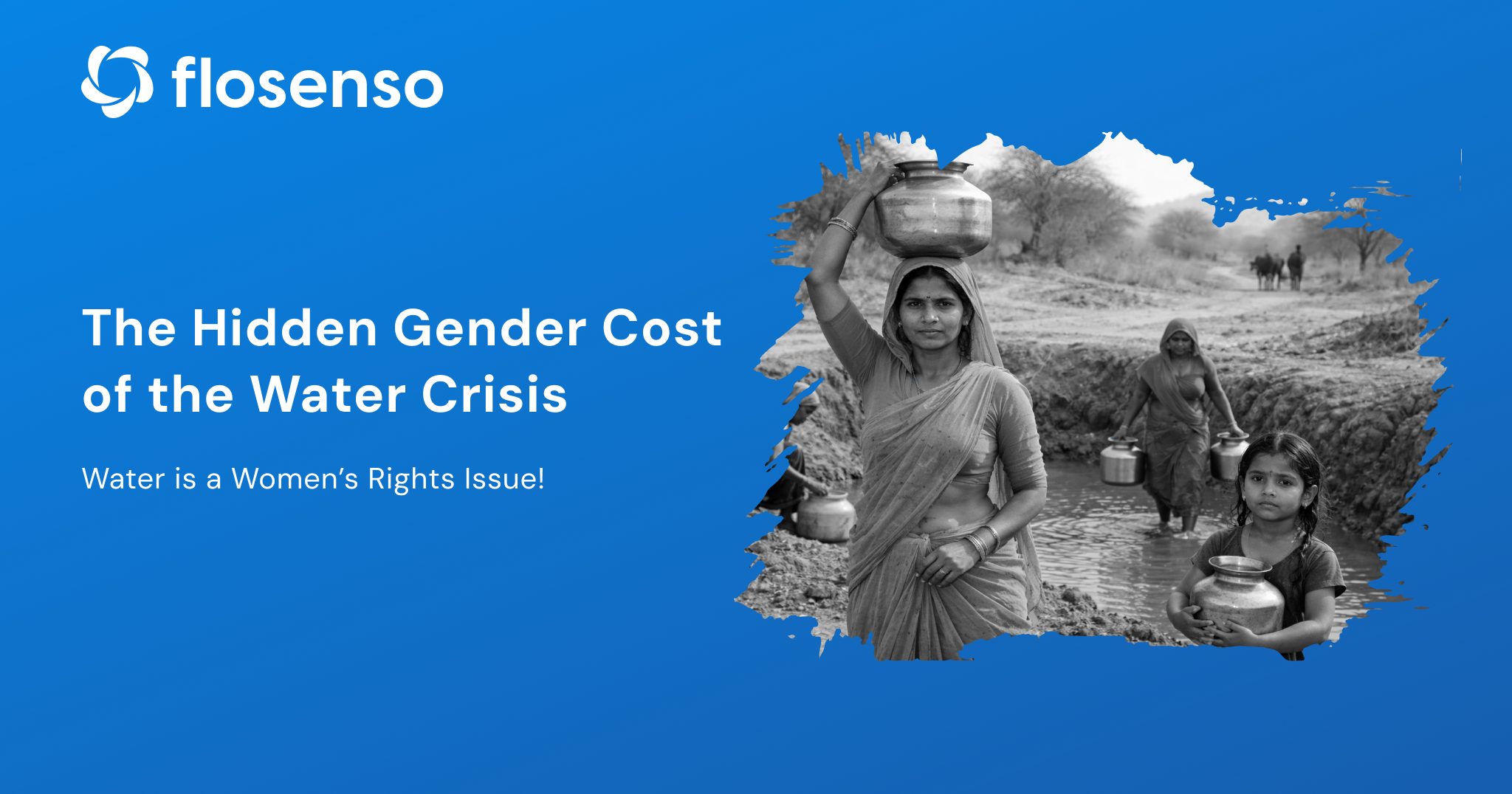
Across much of the world, access to safe drinking water is becoming increasingly uncertain. Communities are working harder every year to secure something that should be basic to life. Every single day, women and girls collectively spend more than 250 million hours collecting water for their households. That is not a typo. It is the equivalent of nearly 28,000 years of human time lost every day simply to secure water for survival.
In many developing regions, the responsibility of managing household water falls primarily on women and girls. From collecting water to rationing its daily use, water access directly affects their health, safety, education, and economic opportunities.
As we approach World Water Day 2026, the conversation around water and women is becoming more urgent than ever. Access to water does not just shape environmental outcomes. It influences education, family wellbeing, safety, and the future opportunities available to millions of women and girls.
Let’s explore the human side of this crisis, and how women are suffering due to water challenges.
The Water Challenges for Women
When we discuss the global water crisis, the conversation usually revolves around rising environmental challenges, climate change, falling groundwater levels, and shrinking reservoirs.
Yet behind these statistics lies a deeply human story.
A story about time.
A story about dignity.
And most importantly, a story about women.
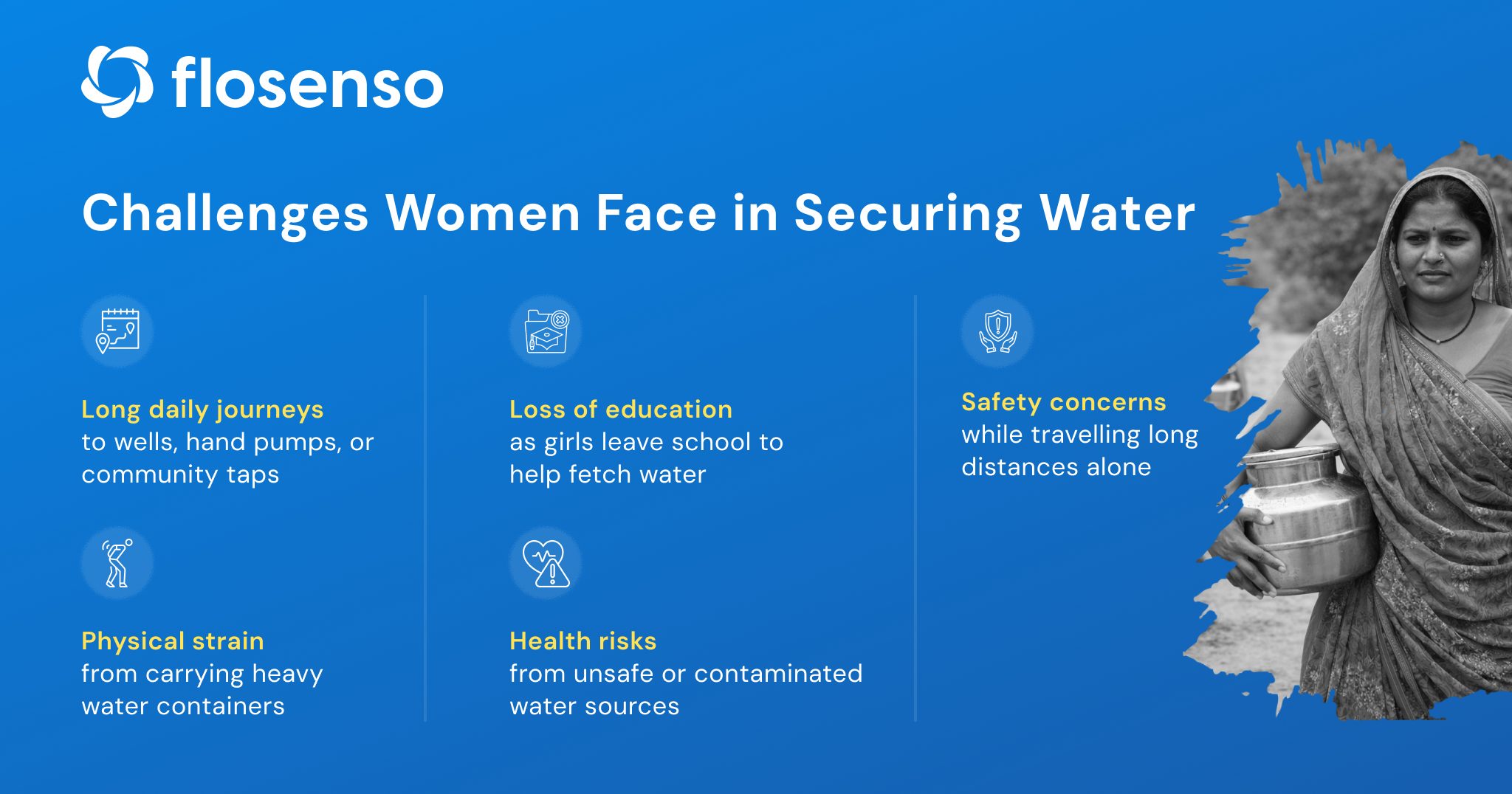
According to global water monitoring data, women are responsible for nearly 80 percent of household water collection in homes without piped water. The burden is enormous.
This includes:
- Walking long distances to collect water
- Carrying heavy containers back home
- Managing water storage and rationing
- Ensuring enough water for cooking, cleaning, and sanitation
According to UNICEF, women and girls spend around 250 million hours every day collecting water globally. In sub-Saharan Africa alone, women and girls spend around 40 billion hours every year collecting water. That amount of time is equivalent to the annual working hours of the entire labour force of a country like France. And yet, this work is rarely counted in economic statistics.
When time is spent walking to water sources, it cannot be spent studying, working, or building a livelihood. That is why experts increasingly recognize water as a human right, not simply a natural resource.
To truly understand the looming water crisis, look at the people carrying the pots and buckets. Beyond the pipelines and policies, this is where the real story unfolds.
Why Water is a Women's Rights Issue?
In many households facing water shortages, women quietly manage an invisible system of survival. They wake early to store water before the supply stops. They plan cooking, washing, and cleaning around limited availability. When taps run dry, they are often the ones who must find alternative sources.
As water becomes less reliable, the pressure inside households grows. Someone must track storage levels. Someone must decide how the available water will be used. Someone must ensure the household continues to function despite shortages. And in most families, that responsibility falls on women.
Across several developing regions, studies show that women walk an average of six kilometres every day to collect water. The journey may involve waiting at distant wells, walking across uneven terrain, and carrying heavy containers back home. This effort rarely receives recognition. Yet it consumes time, physical energy, and emotional resilience. The result is a hidden inequality.
Time spent securing water often replaces time that could have been used for education, employment, or personal growth. Girls may leave school early to help their mothers. Women may lose opportunities to work outside the home. What begins as a shortage of water gradually becomes a barrier to opportunity. That is why access to water is no longer seen only as an aftereffect of rising environmental challenges. Increasingly, it is recognised as a women’s rights issue.
Water and Gender Inequality
As climate pressures grow and water resources become more uncertain, the relationship between water and gender equality is becoming impossible to ignore. Water may appear to be a simple household resource. Yet in many parts of the world, it determines who carries the burden of survival inside a family.
When water becomes scarce, daily routines begin to revolve around it. Meals are planned based on available water. Cleaning is postponed. Bathing becomes limited. Every bucket is measured carefully. Despite playing this central role in household water management, women are rarely included in formal water governance systems. Globally, less than 17 percent of paid jobs in the water sector are held by women.
This gap matters.
Research shows that when women are involved in designing and managing water systems, projects can become up to seven times more effective. Communities maintain infrastructure longer, and water resources are used more sustainably.
The Impact of Water Scarcity on Girls’ Education
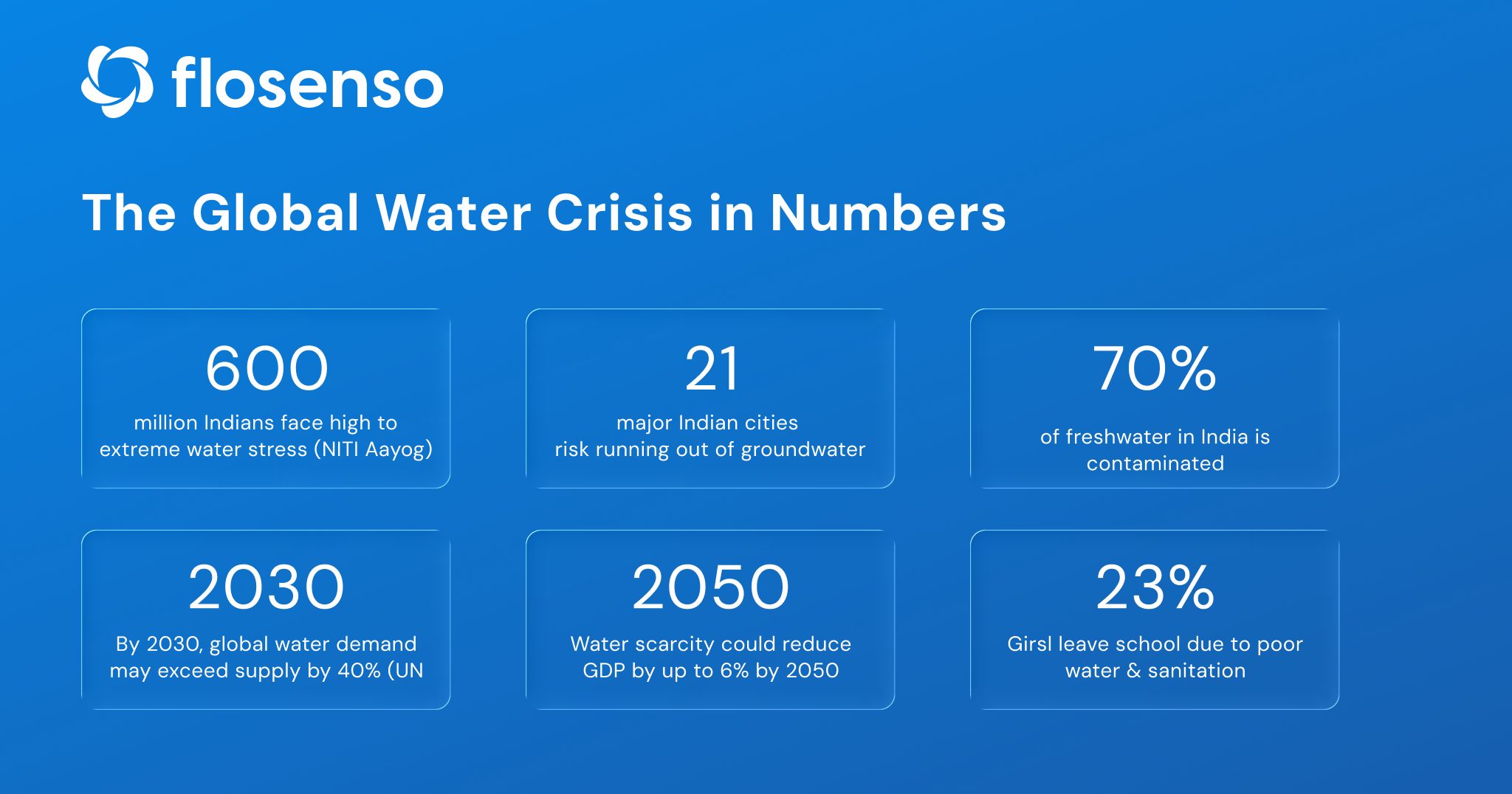
One of the most damaging consequences of water scarcity is its impact on education. When water becomes scarce, families must spend more time collecting it. Often, girls are expected to help with this responsibility. If a girl spends just two hours each day fetching water, that amounts to 730 hours per year. That is nearly four months of school time lost annually. Over time, this loss of education limits career opportunities and reinforces economic inequality.
Research also shows that girls are more likely than boys to drop out of school during drought periods. Families may prioritise immediate household needs over long-term education.
Water crisis in India, impacts sanitation facilities, which is another factor for school dropouts. Nearly 23 percent of girls quit school after reaching puberty, partly because schools lack proper water and sanitation facilities. Globally, 28 percent of schools lack adequate sanitation, and 42 percent do not have handwashing facilities with water and soap.
Without reliable water access, education becomes difficult. And when education stops, opportunities shrink.
The Hidden Female Health and Safety Burden
Water scarcity also creates serious health challenges. Carrying heavy water containers every day can lead to chronic joint pain, spinal injuries, and long-term posture problems. Women also face hygiene challenges when water is scarce. Bathing, washing clothes, and maintaining sanitation become difficult.
The psychological burden is equally significant.
Women are often responsible for caring for children and managing household food supplies. When water becomes scarce, stress around hygiene, food security, and health increases.
Studies have also shown that drought-related economic stress can worsen social issues. In India, rainfall deficits have been linked to increases in domestic violence and dowry-related deaths, highlighting how environmental stress can deepen existing gender inequalities.
Water scarcity therefore affects far more than the environment. It also affects family stability, safety, and wellbeing.
Water Crisis Solutions Begin at Home
Large-scale infrastructure investments are necessary to solve the global water crisis. Governments must invest in reservoirs, recycling systems, and climate-resilient water policies. The UN and other organizations highlight that providing accessible, safe water is not merely about infrastructure, it is about empowering women.
However, providing reliable water access is not only about infrastructure. It is also about empowering communities and households.
Providing safe water closer to homes can transform lives by:
- Reducing the time women spend collecting water
- Enabling girls to remain in school
- Improving community health and productivity
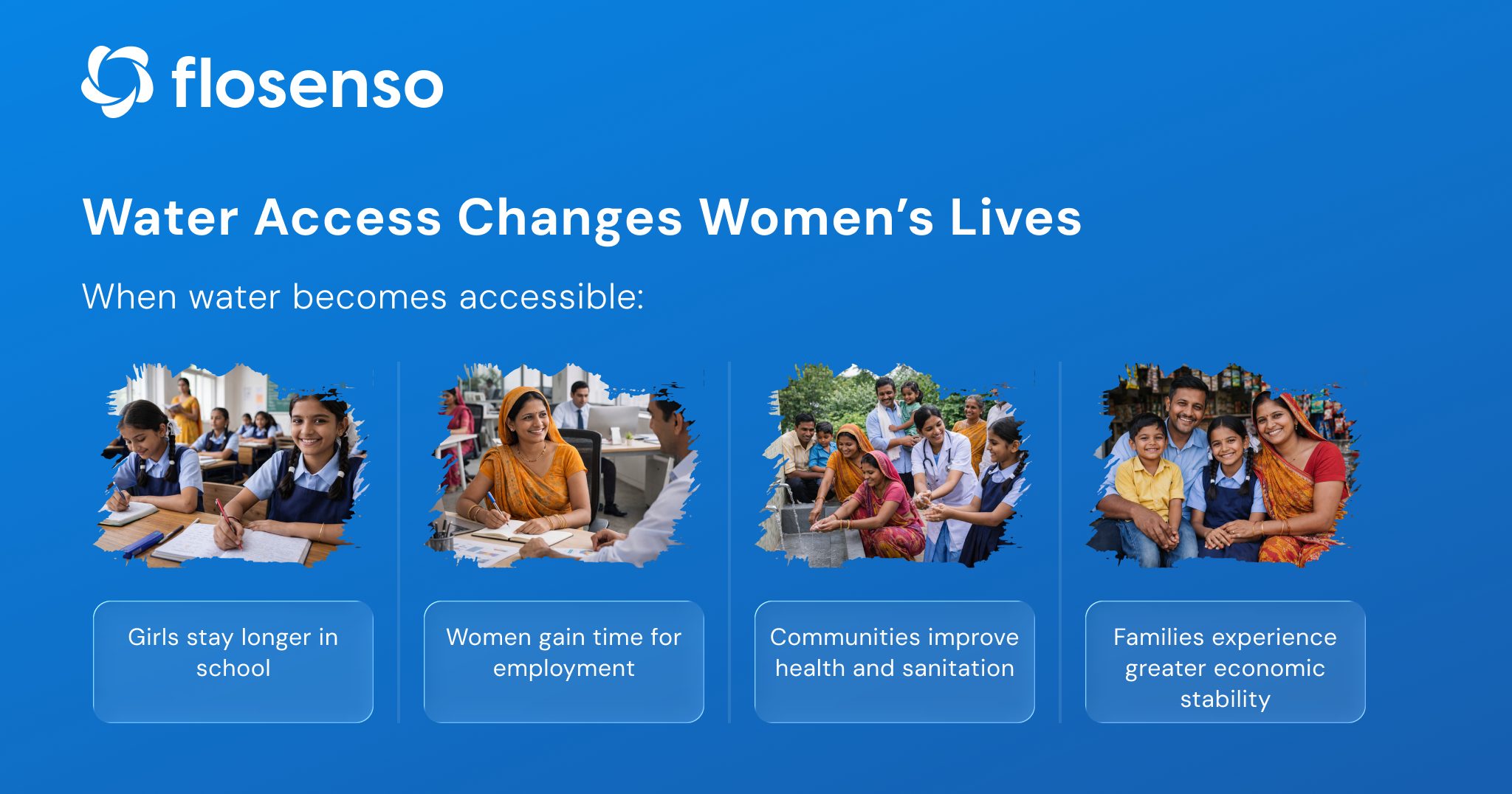
In simple terms, when water becomes accessible, survival time becomes productive time. At the same time, water crisis solutions also begin at home.
Households can contribute through smart water management:
- Preventing unnecessary water wastage
- Monitoring water storage levels
- Improving tank management
- Using automation where possible
One of the most common sources of water waste in homes is tank overflow. When pumps continue running after tanks are full, water spills out unnoticed. Across thousands of households, this leads to significant water loss every day.
Modern water level controller systems use sensors to measure water levels in tanks and automate pump operations. Instead of manually checking tanks or waiting for overflow alarms, homeowners can rely on automated monitoring. These systems use ultrasonic sensors to detect tank levels accurately and switch pumps on or off automatically when required. As a result, pumps stop when tanks are full and start when levels drop, preventing overflow and reducing electricity wastage.
For families, this means fewer worries about managing daily water supply. And for communities, it means smarter water usage.
Looking Ahead
Water is often discussed through numbers and climate models. But behind those statistics are real lives. The 250 million hours women spend collecting water every day represent lost education, lost income, and lost opportunities. Water scarcity affects health, safety, dignity, and equality. That is why water must be recognized not only as a resource but also as a human right.
It is visible in the time women spend managing water for their families. It appears in the school hours lost by girls who must help collect water. It shows up in the physical strain of carrying heavy containers and the mental stress of ensuring that every drop is used carefully.
As we reflect on the World Water Day theme for International Water Day, the question becomes simple.
How can we manage water better in our homes, communities, and cities?
Because when water becomes accessible and reliable, families gain stability. And when families gain stability, society moves closer to equality.
How Flosenso Helps Women Manage Water
For millions of women, managing water is not just a household task. It is a daily responsibility that requires constant attention. Checking tank levels, switching pumps on and off, and ensuring that water does not run out at the wrong time often becomes part of the routine.
Technology can help reduce this invisible burden.
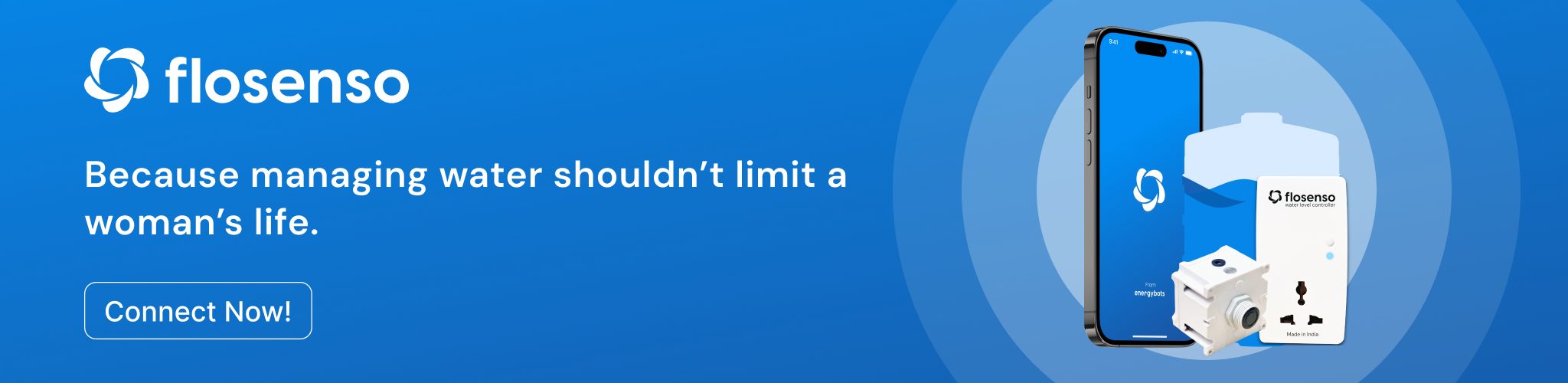
Flosenso is a smart water level controller designed to automate water management in homes. Using ultrasonic sensor technology, it continuously monitors the water level in your tank and automatically switches the pump on or off when required. This prevents tank overflows, reduces water wastage, and ensures that the tank always has sufficient water.
For many households, this simple automation removes the need to repeatedly check water levels or manually manage pumps. Women no longer have to climb terraces to inspect tanks or worry about forgetting to turn off the motor. Instead, water levels can be monitored directly through a mobile app, providing real-time updates and control.
By making water management smarter and more reliable, Flosenso helps households save water, electricity, and time. More importantly, it reduces the everyday stress associated with managing water supply.
Relieve your water stress with Flosenso! Shop Now!